From DESIGN to DESAIGN. What changes?
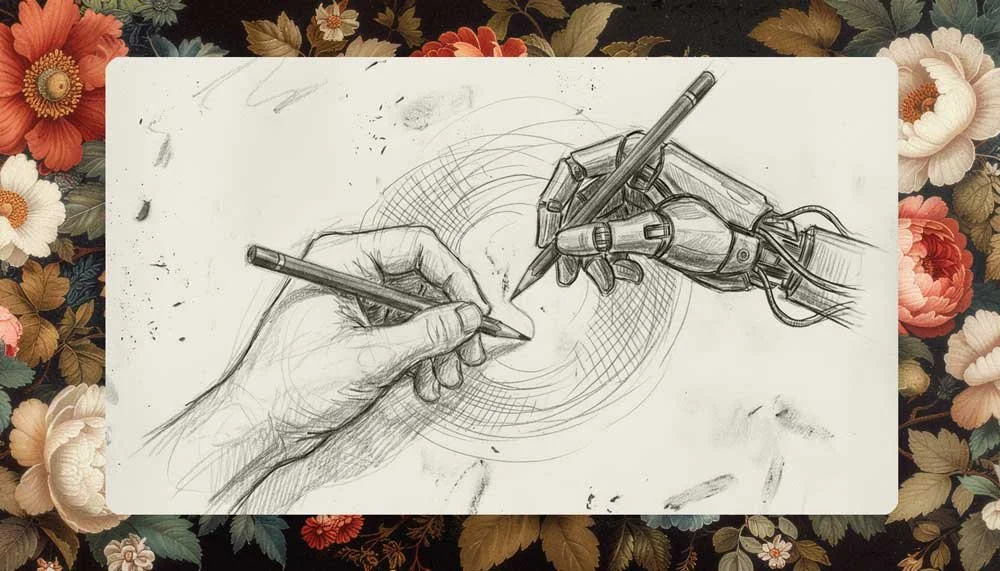
Bild Ki generiert
Change in the way designers work is nothing new. But right now, the pace of that change feels different.
Designers used to cut out printed images and graphic elements, glue them onto paper, apply typography using rub-on letters, and have these montages scanned into film sheets for printing. Then the desktop computer arrived. The cutting and gluing disappeared, and everyone started moving digital elements around on a screen.
Along came the World Wide Web, and everything went from static to connected, from linear to interactive. Websites were designed in Photoshop, then in Dreamweaver, then in Sketch, then in Figma. Web designers became UX designers. Some UX designers became design engineers. Digital products became ubiquitous and, over time, genuinely delightful.
And now AI. And everything is changing again.
Each of these transitions asked designers to unlearn something, rebuild their toolkit, and find their footing on new ground. The ones who thrived were not necessarily the most talented – they were the ones willing to move. Today is no different. It will not be AI that replaces designers. It will be designers who learn to work with AI who replace those who do not.
So what does that actually mean for the daily practice of design?
Right now, there is a loud debate about the right way to use AI in design. One camp argues that jumping into vibe coding before proper research and problem definition is a fool's game – that discovery still needs to come first, and that speed without direction is just expensive noise.
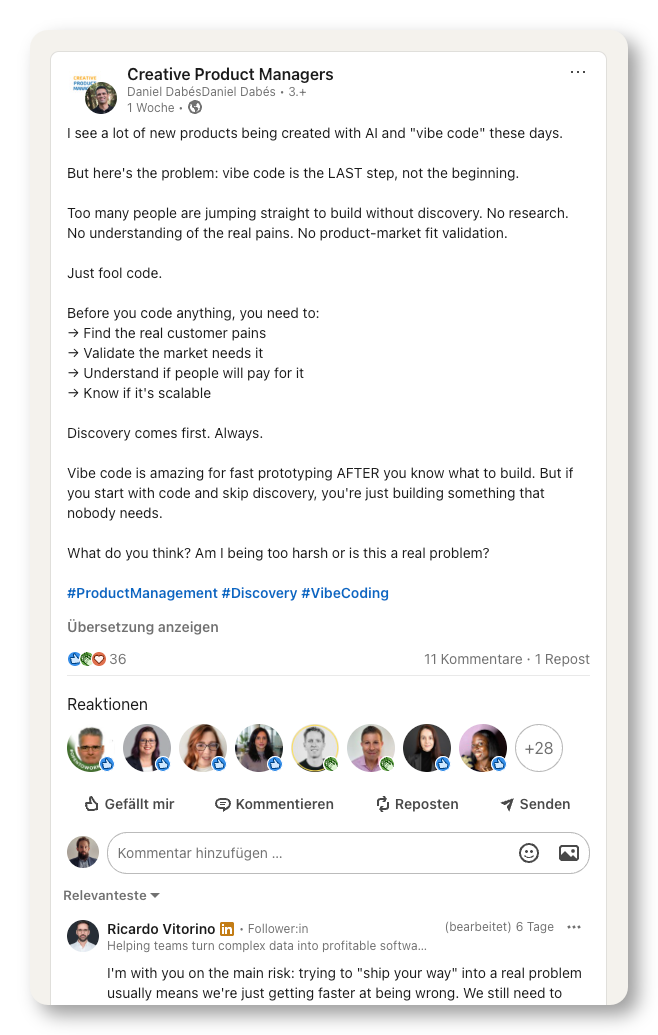
Creative Product Managers Group on LinkedIn
The other camp argues the opposite: skip the process overhead, trust your intuition, ship fast, and learn from what happens in the wild.
Jenny Wen arguing for more craft and intuition
I think neither position is entirely right. Let's take the iPhone as an example. Apple did not wait for users to articulate the need for a touch-based computer in their pocket. That insight did not come from a survey. But Apple also could not have succeeded in a mass market without a deep understanding of how easily people get confused and scared by complexity. They did not need a lengthy discovery process to start building – but they absolutely needed to understand people to build something worth using.
For designers, I see two distinct paths forward – and which one is right for you depends on where your strengths and ambitions lie.
The first path is for designers who lean towards strategy and product leadership. Their challenge is learning how to orchestrate human-with-AI collaboration at scale – inside teams, inside organisations – in ways that produce better outcomes faster, and that actually land with the people they are intended for.
The second path is for designers who lean towards craft and execution. Their opportunity is figuring out how to use AI to accelerate and deepen their work, to delegate the tasks they find draining or repetitive, and especially to build their own custom tooling to produce results that would not have been possible before. For them AI becomes a creative and technical expert collaborator that is always available, never tired, and infinitely patient.
Both paths require the same foundation: agency, empathy, sensitivity, taste, judgement, nuance, humour, and the ability to build real relationships with real people. These are not soft skills. Two things are happening at once right now: the ceiling of what is technically producible keeps rising, and the floor of who is able to produce functional interactive digital artefacts keeps falling. In that environment, the qualities that make a designer genuinely good at their work are not becoming less important – they are becoming the only thing that is hard to replicate.
Important to keep in mind though: being able to vibe code does not make you a design engineer, let alone a developer. If you do not have at least a general understanding of programming concepts and how code actually works, you will eventually vibe code yourself into a corner – with something broken, no idea why, and no way out. AI can generate code faster than you can read it. That is only useful if you can tell when it is heading in the wrong direction and if you understand why it breaks when it breaks.
The return of divergence
For the better part of a decade, digital design converged. The same component libraries, the same design conventions, the same type scales, the same interaction patterns, the same aesthetic language appearing across products, industries, and geographies. There were good reasons for this – shared conventions reduce friction, design systems accelerate production, and consistency builds user trust. But the result was a kind of creative flattening that many designers felt.
AI is beginning to reverse that. As the cost and effort of building new things continues to fall, the pressure to default to established patterns weakens. It becomes genuinely feasible to explore directions that would previously have been cut for budget or time reasons, to prototype ideas that sit outside the conventions, and to build things that look and feel and behave differently because there is no longer a compelling practical reason not to try. I think we are about to see a new wave of divergence and experimentation. The barriers to making are coming down, and with them, the excuses for not trying something genuinely different.
This is not a prediction about aesthetics. It is a structural change in what is economically viable to attempt. And for designers who have felt constrained by the efficiency logic of the last decade, it represents a real opening – not just to make things faster, but to make things that are genuinely different. It is simply a different backdrop whether making an app that you imagined as a cool experiment to try costs you 250.000 $ or a pro subscription of some ai coding platform and a few weekends.
The question is whether designers will use that opening or default to using AI to produce the same things more cheaply.
That choice is not a technical one. It is a creative and professional one. And it might be also a matter of resisting the capitalistic logic to increase productivity rather than creativity.
Outcome over process – and the end of fidelity as a signal
For years, the design process had a recognisable shape. You started with research and discovery, moved through concept, information architecture, wireframes, look and feel, UI design, a design system, and eventually handed something over to frontend development. The fidelity of an artefact told you where you were in the process. A rough wireframe meant early exploration. A polished prototype meant you were close to shipping.
That logic is breaking down as AI makes it possible to produce high-fidelity, interactive artefacts from the very beginning of a project. Which means fidelity is no longer a reliable signal of project phase – it is simply a choice. And that changes the conversation with clients, with stakeholders, and with users.
Showing is more convincing than explaining. Users do not have to imagine how something might feel to use – they can experience it immediately. The experiential, visceral qualities of a solution are available from day one. Teams that understand this will move faster and build more alignment early. Teams that do not will keep producing deliverables that nobody asked for at stages where decisions have already been made.
Alongside this, the development process itself is compressing. The long sequential pipeline from concept to live product is giving way to something shorter and more iterative – shipping earlier, pivoting on live products, and finding product-market fit through real contact with users rather than through extended emulation and closed group feedback.
Strategy means knowing when more is not better
As it becomes easier to generate design directions, run explorations, and produce artefacts, the risk is not running out of ideas. The risk is drowning in them. AI makes it instantly possible to spin up polished digital artefacts based on existing frameworks and conventions. Which means the interesting question is no longer can you build it – it is why are you building this, and for whom.
Strategic design work increasingly means knowing what not to do. Being decisive about which activities in a design process deserve human time and attention, and which can be delegated to AI becomes a critical skill. Knowing when to stop iterating, how many directions are genuinely worth exploring, and when adding another round of refinement is just burning tokens without improving outcomes requires experienced design leadership.
This requires a kind of discipline that does not come naturally in a culture that is relying on extensive experimentation and iteration. But with AI making it trivially easy to generate more options, more variations, and more documentation, the ability to make sharp decisions about scope and focus becomes a core design skill – not a project management afterthought.
It also means thinking carefully about cost. In larger projects, the financial reality of AI-assisted work – API costs, model selection, the build versus buy decision on tooling – will fall within the designer's area of responsibility in ways it never did before. It is a true balancing act as design leaders need to shape environments that foster curiousity and experimentation while at the same time needing to keep costs in check.
Leadership in a human-and-machine environment
Design leadership used to mean guiding people. It still does. But it now also means guiding systems – configuring and overseeing agentic workflows, helping teams understand how to leverage AI effectively, and making considered decisions about where human judgement is non-negotiable and where it can be safely offloaded.
The cultural side of this is just as demanding as the technical side. Nurturing genuine agency and curiosity in a team when AI can short-circuit the learning process. Creating space for experimentation without chaos. Allowing for the kind of asynchronous, remote collaboration that AI-enabled workflows make possible, while maintaining the shared standards and values that stop output from becoming generic.
And then there is the ethical dimension, which is not going away.
Questions about bias in AI-generated content, about intellectual property, about transparency with users and clients – these are landing on design leaders before most organisations have policies to address them.
That is not a reason to wait. It is a reason to develop a position now.
The expanding technical responsibility of designers
Designers are acquiring a new kind of technical responsibility – and it is broader than learning to prompt effectively or use a new tool.
Understanding the potential and limitations of specific AI models and tool stacks. Configuring workflows. Building agents and evaluation mechanisms. Creating feedback loops that allow those workflows to improve over time. Forecasting and monitoring the costs of AI-assisted production. Building custom tooling that gives a team a genuine advantage rather than just replicating what everyone else is doing with the same off-the-shelf products.
This does not mean every designer needs to become an engineer. But it does mean that a working understanding of how these systems function – where they are reliable, where they hallucinate, what they optimise for, and what they cannot do – is becoming a baseline competence, not an optional extra.
The designers and teams that build their own tooling will have an advantage that is difficult to replicate. Not because the tools themselves are secret, but because the thinking embedded in them – the specific combination of workflow, evaluation criteria, and design judgement – will be a creative practice itself and reflect something that cannot be downloaded.
Human competence in an accelerating industry
One shift that is easy to overlook because it does not announce itself loudly: the growing importance of communication, relationships, and the ability to operate effectively inside complex organisations.
As AI handles more of the production work, the distinctly human activities – building trust with a client, navigating the politics of a large organisation, speaking the language of sales or marketing or engineering, finding the internal sponsor who will actually champion a project – become proportionally more valuable. These are the activities that move work through organisations and into the world. AI does not do any of them.
The same applies to the qualities that define good design judgement: empathy, sensitivity, taste, nuance, humour, the ability to read a room or a brief and understand what is actually being asked. These do not disappear in value as AI gets better at generating outputs. If anything, they become the lens through which all of that output is filtered and made meaningful.
Finally, and practically: learning how to keep learning without burning out. The pace of change in AI tooling is genuinely relentless, and the design industry was already fast.
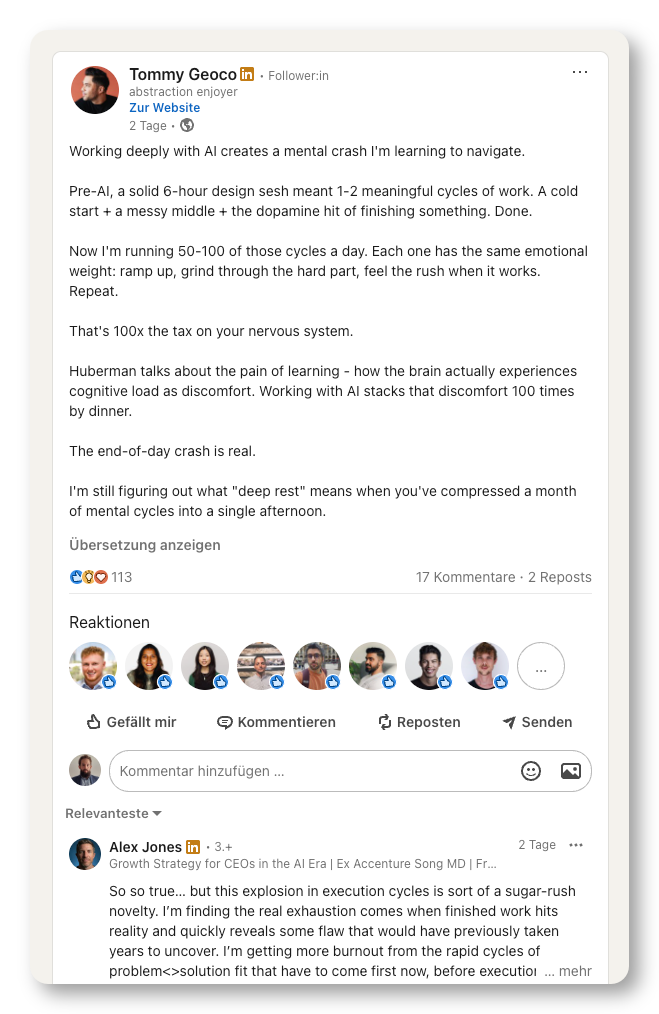
LinkedIn discussion about ai exhaustion
Building a structured, self-paced approach to experimentation and skill development – with deliberate breaks and realistic expectations – is not a luxury. It is a precondition for staying effective over the next several years rather than just the next several months.
What this means for you, right now
None of this requires you to have figured everything out before you start. The designers I find most credible in conversations about AI are not the ones with the most polished workflow or the most impressive tool stack. They are the ones who are genuinely curious, actively experimenting, and honest about what they do not yet know.
The two paths I described earlier – towards strategy and leadership, or towards craft and custom tooling – are not mutually exclusive and they are not fixed. Most designers will move between them depending on the project, the team, and the moment. What matters is that you are moving deliberately rather than waiting for the landscape to stabilise. It will not stabilise. The useful response to that is not anxiety. It is motion.
Start somewhere small and specific. Pick one part of your current work that frustrates you, slows you down, or produces results you are not proud of – and spend a week exploring whether AI changes any part of that equation. Do not try to transform your entire practice at once. Build a side project you have been putting off. Automate something you hate doing. Try vibe coding something simple, and pay attention to where it breaks down and why. Learn from that.
Then share what you find. The most valuable thing about this moment in the industry is that almost everyone is a beginner at something, and the collective understanding is being built in public, in real time. Your experiments, your failures, and your unexpected discoveries are useful to other designers navigating the same terrain.
So that is the call to action: start something, pay attention, and tell people what you learned.
I deeply believe the next wave of innovation will not come from insight and proven demand but from intent, agency and curiosity.
If you have any suggestions, additions or questions, feel free to use the comments or the contact form. I look forward to hearing from you!
Some selected resources on the topic
These resources offer a good mix of theoretical concepts and practical applications to deepen your understanding of the subject. Note that podcasts often provide current insights and perspectives, while books can offer a more comprehensive foundation.
Book recommendations
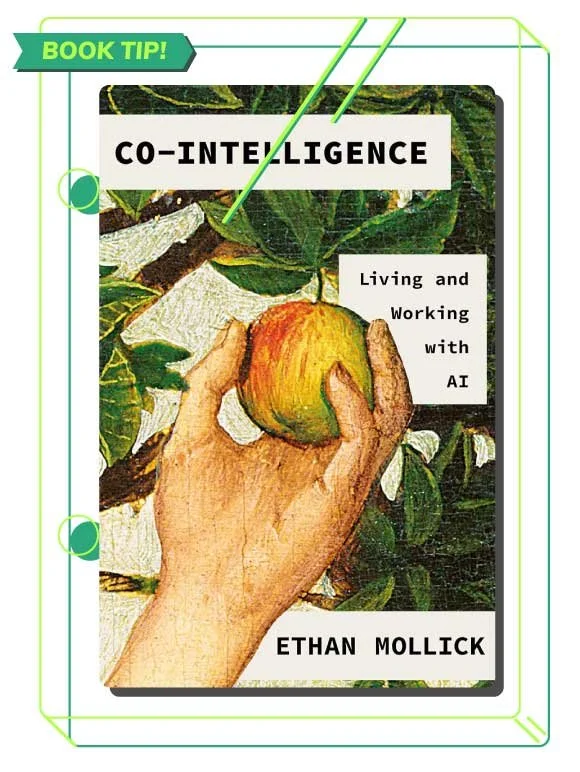
In Co-Intelligence, Wharton professor Ethan Mollick urges us to engage with AI as co-worker, co-teacher, and coach. He assesses its profound impact on business and education, using dozens of real-time examples of AI in action. Co-Intelligence shows what it means to think and work together with smart machines, and why it's imperative that we master that skill.
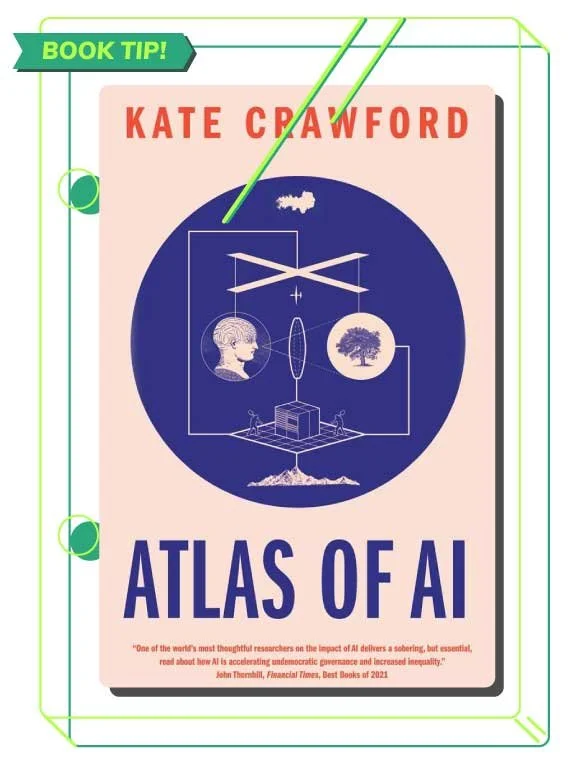
For sure the AI Antithesis. Focusing on the societal and environmental costs of AI. Excellently myth-busting. Making underlying power structures, assumption and biases transparent.
Drawing on more than a decade of research, award-winning scholar Kate Crawford reveals what happens when artificial intelligence saturates political life and depletes the planet? How is AI shaping our understanding of ourselves and our societies?
Rather than taking a narrow focus on code and algorithms, Crawford offers us a material and political perspective on what it takes to make AI and how it centralizes power. This is an urgent account of what is at stake as technology companies use artificial intelligence to reshape the world.
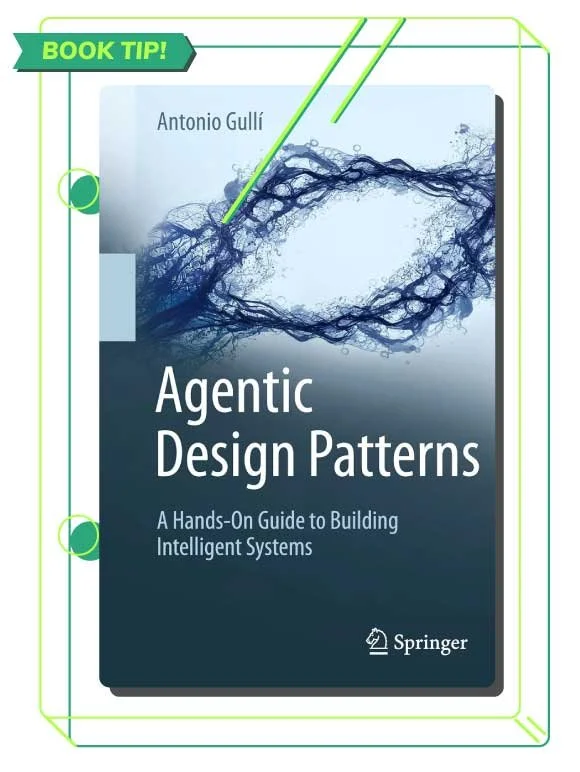
Agentic Design Patterns: A Hands-On Guide to Building Intelligent Systems is structured as a comprehensive hands-on guide, with each chapter dedicated to a single agentic pattern. Within each chapter, you will find a detailed pattern overview, practical applications and use cases, one or more hands-on code example, and key takeaways for quick review.
From foundational concepts such as Prompt Chaining and Tool Use to advanced topics like Multi-Agent Collaboration and Self-Correction, readers will gain practical knowledge they can immediately apply.
Links and Blog Posts
AI: First New UI Paradigm in 60 Years
Jakob Nielsen (Nielsen Norman Group) about the shift towards intent-based UX
AI and the Creative Process: Part One
AI and the Creative Process: Part Two
AI and the Creative Process: Part Three
Dr. James Hudson about how the shift of generative ai is not just about simplifying or speeding up the creative process. It opens up new possibilities for creativity by extending the capabilities of the human artist.
Generative AI and the Creative Industry: Finding Balance Between Apologists and Critics
Article trying to balance critical and ai enthusiast views by Creative Director Frederico Donelli
Podcasts and Talks
listen
〰️
learn
〰️
repeat
〰️
listen 〰️ learn 〰️ repeat 〰️
Why Designers Can No Longer Trust the Design Process
Talk by Jenny Wen (Design Lead at Anthropic) @ hatch conference
Josh Clark and Veronika Kindred: Sentient Design and the future of interfaces
Design Better Podcast
Dive into 5 Future-Ready UX Meta Skills You Needs by 2030 and How to Build Them Today
Podcast by UX Designer Patricia Reiners
About the author
With more than 15 years of experience as a designer, consultant and design manager – freelance and in agencies – I now work independently in various constellations and teams on the topics of user-centred innovation processes, design-driven innovation, organisational development, digital products, service design and interaction design. What I know and what I am learning, I share on this blog.
Image references
www.linkedin.com
www.youtube.com
Affiliate Disclaimer
This blog contains affiliate links. This means I receive a small commission if you purchase products through these links. This commission helps me to run this blog and continue creating high-quality content for you.
Please note that my opinions on the products or services I recommend are independent and based on my own experience and research. The use of affiliate links has no influence on my recommendations or reviews.
If you have any questions about the affiliate links or the products featured, I am happy to help. Thank you for your support!